
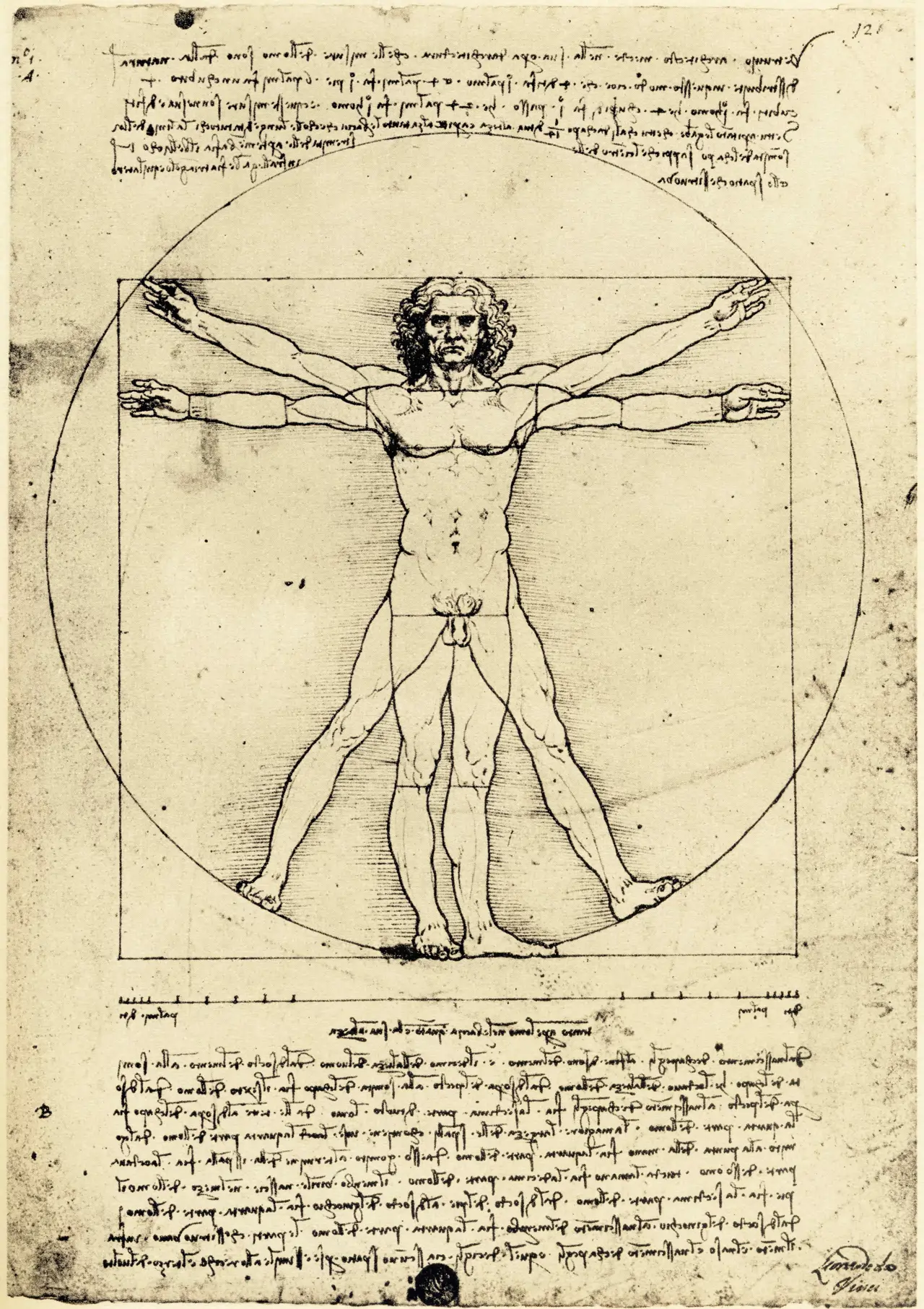
How Leonardo da Vinci Mapped the Human Body 🎨💀
Forget what you know about dusty old art museums. Before there were X-rays, MRI scans, or even Gray’s Anatomy textbooks, there was Leonardo da Vinci.
While everyone else in the 1400s was busy painting flat-looking saints, Leo was sneaking into morgues at night to figure out how we actually work. He wasn’t just an artist; he was the world’s first serious anatomical scientist.
1. He Didn’t Just Guess—He Dissected
In the Renaissance, people had some pretty wild ideas about how the body worked (like thinking the heart was just for “heating” the blood). Leonardo wanted the truth. He dissected over 30 human corpses during his life.
By peeling back layers of muscle and skin, he became the first person to accurately draw:
- The human spine’s true shape.
- How a baby sits inside the womb.
- The complex “ropes and pulleys” system of our tendons.
2. The “Engineer” Perspective
Because Leo was also an engineer who designed flying machines and tanks, he looked at the human body like a machine.
- Mechanical Advantage: He realized that muscles work like levers.
- 3D Thinking: He was the first to draw body parts from multiple angles (front, back, and side) so doctors could see the “total volume” of an organ.
- The Heart: He discovered that the heart has four chambers and even figured out how the valves work by building a glass model of an aorta and pumping water mixed with seeds through it to watch the flow.
3. Why This Matters Today
Leonardo’s notebooks were hundreds of years ahead of his time. In fact, some of his observations about heart disease weren’t “officially” rediscovered by modern medicine until the 1900s!
He proved that Art + Science = Genius. You can’t draw a realistic human hand unless you understand the mechanics of the bones underneath.
Fun Fact: Leo wrote all his notes in “mirror writing” (backwards). Some think it was to keep his secrets safe, others think it was just because he was left-handed and didn’t want to smudge the ink!
